



Why keeping cash secured in your home is the smartest outage prep you can do
In the span of a single week this month, the FAA, Microsoft, JPMorgan Chase, United Airlines, the NSA, and Apple all suffered outages. Apple's problem hit Apple Pay, the App Store, and iCloud sign-in. The NSA's classified network was down for about three days.
As the headlines rolled in, many expected hackers to take credit. The causes, however, were much less dramatic. Microsoft traced its outage to a bug from a July update, Chase to a software bug in an on-premise hardware system, and Apple to an internal update. When considering how to prepare for if and when something like this happens again (as outages seem to occur more and more frequently), it’s critical to consider the actual impact on your life.
Don’t bring a fire extinguisher to a snowstorm
As the outages piled up, generators, toilet paper, and MREs began flying off the shelves. While stockpiling necessities in case of an emergency is a productive endeavor, it won’t be helpful in a situation such as the one that came about in the last couple of weeks. A generator isn’t helpful when your banking app goes down for several hours, but having cash on hand is.
Consider the scenarios we’re increasingly facing: while a multi-week grid collapse would be incredibly disruptive, it is also much less likely to occur than a day when your banking app won't load, your card reader can't connect, or Apple Pay fails at the checkout line.
For this situation, you don't need a pallet of freeze-dried food. You need cash.
Why cash is the simplest hedge
Cash has no login, no server, no software update, and no Wi-Fi requirement. It doesn’t matter if:
- Your banking app is down or locked out
- Your phone's wallet won't authenticate
- A store's payment network is offline
- You're traveling and a flight cancellation means a surprise hotel, meal, or ride home
- You need gas, groceries, or a prescription immediately
Keeping enough cash around to cover a few days of essentials can make all the difference. We recommend looking at your household budget to consider how much cash is the right amount for your family, and suggest keeping it in a variety of bills (because an outage is a bad time to ask a cashier to break a hundred).
This brings up the real question: where should you store cash in your home?
A coffee can in the closet is easy for a burglar to find, and an envelope in a drawer is easy to lose in a fire or a move. Not only that, but no one remembers to replace it if it gets spent. Read more about the dangers of so-called “hiding spots” here.
A small safe is the best place to store cash in your home. But here is where to be thoughtful – small safes are not all created equal, any by going for the connected, app-controlled, "smart" safe you can find, you might inadvertently sabotage your own goal. If your emergency cash sits behind a lock that depends on the internet, a phone, or a cloud account, you've rebuilt the same single point of failure you were trying to escape.
What a good outage-proof safe looks like
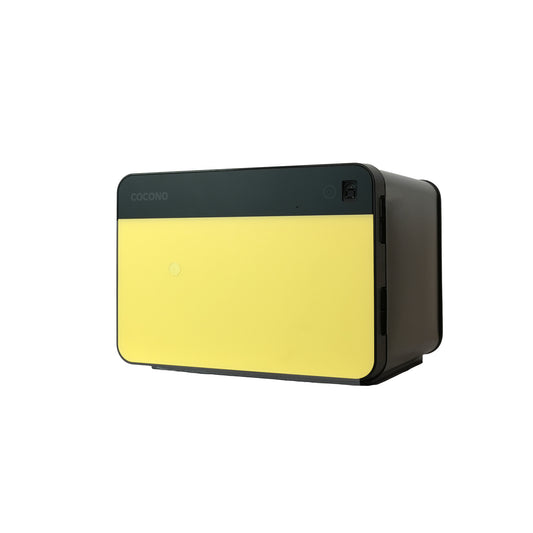
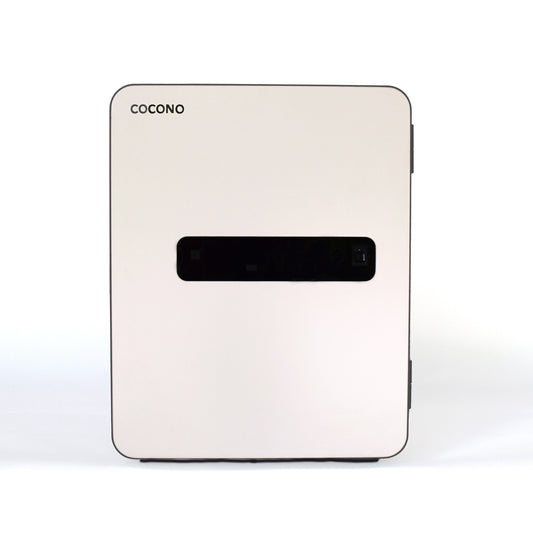
At Cocono, we designed our safes to be convenient, but never dependent.
Redundant locking mechanisms. Never get locked out: open your small safe with a keypad code, your fingerprint, or, in an emergency, with the override keys.
Battery-powered. Cocono fire safes don't need a power outlet or a working grid, so a blackout won’t stop you from getting into your safe. Batteries run out? Use the included back-up power supply.
No internet connection. Our home safes can't go online, so there's nothing to be knocked offline by an outage.
No Bluetooth. No wireless link means no wireless attack.
No phone connection, no app, no account. There's no login to forget, no server to go down, and no dodgy app to be hacked.
No AI integration. There's no software layer making decisions about your lock, and nothing that can be updated into failing the way those big systems did.
While smart safes are useful in many cases, when preparing for outages, they are not. It’s critical to remember what a safe is for in the first place: solid physical security that protects your cash and valuables from theft and fire. Convenient when you need it – secured when you don’t.
The bottom line
The recent outages are a useful reminder, reminding us how quickly everyday systems can fail all at once. While panic-buying won't help with the failures like this, a modest stash of cash will - as long as it's stored securely and doesn't depend on any of the technology that just went down.
Keep some cash. Keep it in a small safe. And choose a safe that works when everything else doesn't.
Shop Cocono Safes: advanced where it helps, offline where it counts.